Pilgrim Library Christian Classics
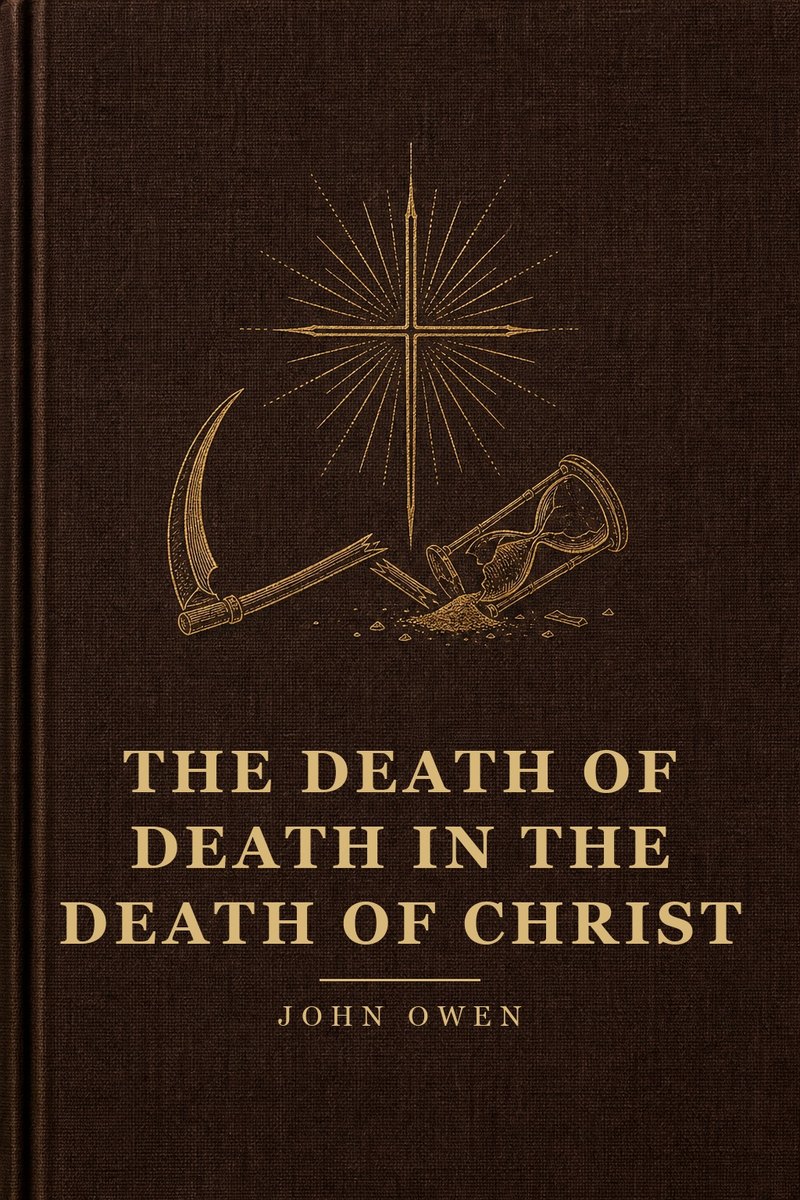
The Death of Death in the Death of Christ

The Death of Death in the Death of Christ

John Owen (1616–1683) was the foremost Puritan theologian of seventeenth-century England. A child prodigy at Oxford, he became dean of Christ Church and vice-chancellor of the university under Cromwell, while preaching and writing works of great depth. The Mortification of Sin, Communion with God, and his massive exposition of Hebrews — many of them in our library — still define Puritan divinity at its most searching and exact.

Free

Free: get it — here or in the Christian Classics app — and it's yours to read and listen to on every device you sign in to. About a tenth of it can be read here first, free.

First published
1647
Length
154k words · about 10 hours
Chapters
43
Narration
🎧 Fable · British English
About this book

John Owen's defense of the definite atonement, first published in 1647. Owen argues that Christ's death actually accomplished the redemption of those for whom it was offered, rather than merely making salvation possible, and answers the objections raised against this view at length. It remains the classic Puritan statement of particular redemption.

Contents

  1. Prefatory note.
  2. Analysis.
  3. To the Right Honourable Robert, Earl of Warwick.
  4. Attestation by Stanley Gower.
  5. Attestation by Richard Byfield.
  6. To the reader.
  7. Title.
  8. Chapter I. In general of the end of the death of Christ, as it is in the Scripture proposed.
  9. Chapter II. Of the nature of an end in general, and some distinctions about it.
  10. Chapter III. Of the agent or chief author of the work of our redemption, and of the first thing distinctly ascribed to the person of the Father. 🔒
  11. Chapter IV. Of those things which in the work of redemption are peculiarly ascribed to the person of the Son. 🔒
  12. Chapter V. The peculiar actions of the Holy Spirit in this business. 🔒
  13. Chapter VI. The means used by the fore-recounted agents in this work. 🔒
  14. Chapter VII. Containing reasons to prove the oblation and intercession of Christ to be one entire means respecting the accomplishment of the same proposed end, and to have the same personal object. 🔒
  15. Chapter VIII. Objections against the former proposal answered. 🔒
  16. Chapter I. Some previous considerations to a more particular inquiry after the proper end and effect of the death of Christ. 🔒
  17. Chapter II. Containing a removal of some mistakes and false assignations of the end of the death of Christ. 🔒
  18. Chapter III. More particularly of the immediate end of the death of Christ, with the several ways whereby it is designed. 🔒
  19. Chapter IV. Of the distinction of impetration and application — The use and abuse thereof; with the opinion of the adversaries upon the whole matter in controversy unfolded; and the question on both sides stated. 🔒
  20. Chapter V. Of application and impetration. 🔒
  21. Chapter I. Arguments against the universality of redemption — The two first; from the nature of the new covenant, and the dispensation thereof. 🔒
  22. Chapter II. Containing three other arguments. 🔒
  23. Chapter III. Containing, two other arguments from the person Christ sustained in this business. 🔒
  24. Chapter IV. Of sanctification, and of the cause of faith, and the procurement thereof by the death of Christ. 🔒
  25. Chapter V. Being a continuance of arguments from the nature and description of the thing in hand; and first, of redemption. 🔒
  26. Chapter VI. Of the nature of reconciliation, and the argument taken from thence. 🔒
  27. Chapter VII. Of the nature of the satisfaction of Christ, with arguments from thence. 🔒
  28. Chapter VIII. A digression, containing the substance of an occasional conference concerning the satisfaction of Christ. 🔒
  29. Chapter IX. Being a second part of the former digression — Arguments to prove the satisfaction of Christ. 🔒
  30. Chapter X. Of the merit of Christ, with arguments from thence. 🔒
  31. Chapter XI. The last general argument. 🔒
  32. Chapter I. Things previously to be considered, to the solution of objections. 🔒
  33. Chapter II. An entrance to the answer unto particular arguments. 🔒
  34. Chapter III. An unfolding of the remaining texts of scripture produced for the confirmation of the first general argument for universal redemption. 🔒
  35. Chapter IV. Answer to the second general argument for the universality of redemption. 🔒
  36. Chapter V. The last argument from scripture answered. 🔒
  37. Chapter VI. An answer to the twentieth chapter of the book entitled, “The Universality of God’s Free Grace,” etc., being a collection of all the arguments used by the author throughout the whole book to prove the universality of redemption. · Part 1 🔒
  38. Chapter VI. An answer to the twentieth chapter of the book entitled, “The Universality of God’s Free Grace,” etc., being a collection of all the arguments used by the author throughout the whole book to prove the universality of redemption. · Part 2 🔒
  39. Chapter VI. An answer to the twentieth chapter of the book entitled, “The Universality of God’s Free Grace,” etc., being a collection of all the arguments used by the author throughout the whole book to prove the universality of redemption. · Part 3 🔒
  40. Chapter VI. An answer to the twentieth chapter of the book entitled, “The Universality of God’s Free Grace,” etc., being a collection of all the arguments used by the author throughout the whole book to prove the universality of redemption. · Part 4 🔒
  41. Chapter VII. The removal of other remaining objections. 🔒
  42. Some few testimonies of the ancients. 🔒
  43. An appendix upon occasion of a late book published by Mr Joshua Sprigge, containing erroneous doctrine. 🔒

Reading groups

🌐 Public discussionOpen to every reader of this book

More by John Owen

View all

More in Salvation & the Gospel

View all