Pilgrim Library Christian Classics
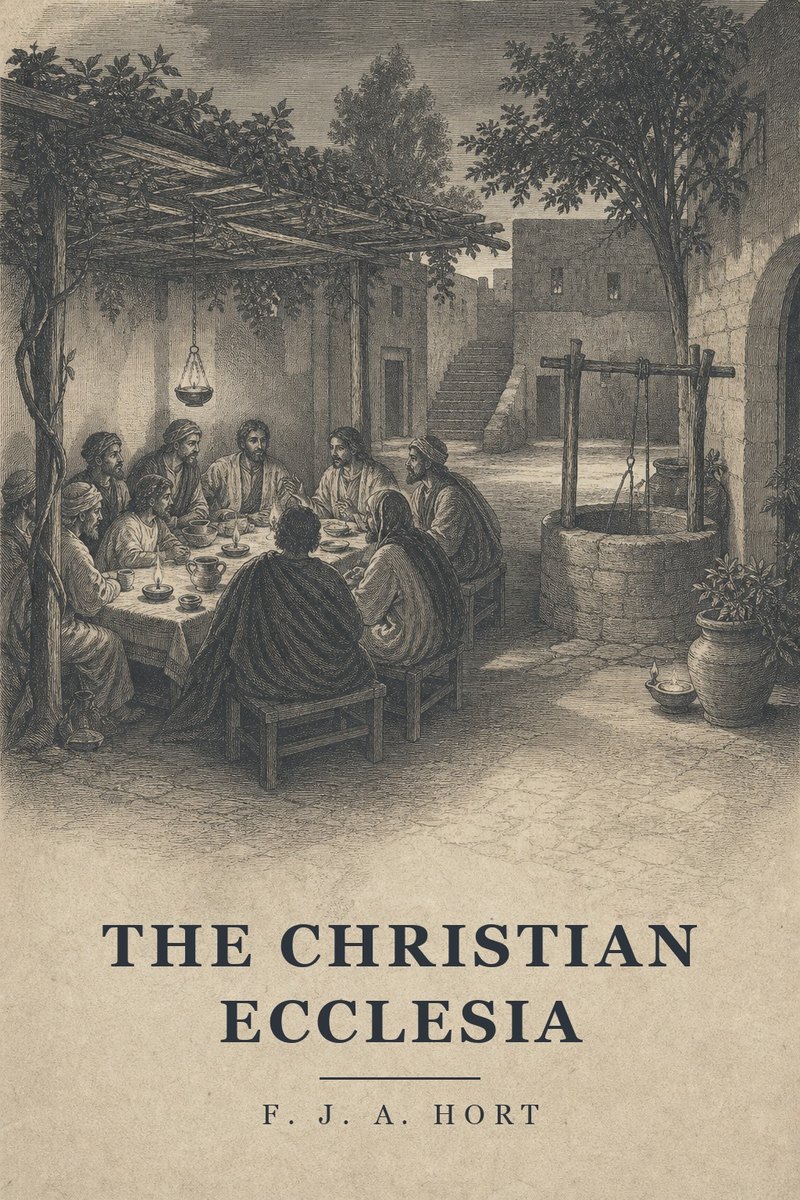
The Christian Ecclesia

The Christian Ecclesia

Fenton John Anthony Hort (1828–1892) was an Irish-born Anglican theologian who taught at Cambridge, becoming Lady Margaret's Professor of Divinity. With B. F. Westcott he spent twenty-eight years preparing a critical edition of the Greek New Testament, published in 1881 and long influential in textual studies. His many lectures and essays appeared mostly after his death; our library holds his commentary on the Epistle of James and his lectures The Christian Ecclesia.

Free

Free: get it — here or in the Christian Classics app — and it's yours to read and listen to on every device you sign in to. About a tenth of it can be read here first, free.

First published
1897
Length
59k words · about 4 hours
Chapters
15
Narration
🎧 Fenrir · American English

About this book

F. J. A. Hort's lectures on the early church's understanding of the church itself, published in 1897. Hort examines the New Testament language for the Christian community and asks what the ecclesia was in the apostolic age before later institutions developed. It is a careful, scholarly inquiry by one of the leading New Testament critics of the Victorian era.
Contents

  1. Preface
  2. Lecture I. The Word Ecclesia.
  3. Lecture II. The Apostles in Relation to the Ecclesia. 🔒
  4. Lecture III. Early Stages in the Growth of the Ecclesia. 🔒
  5. Lecture IV. The Ecclesia of Antioch. 🔒
  6. Lecture V. The Exercise of Authority. 🔒
  7. Lecture VI. St. Paul at Ephesus. 🔒
  8. Lecture VII. The ‘Ecclesia’ in the Epistles. 🔒
  9. Lecture VIII. The Earlier Epistles of St. Paul. 🔒
  10. Lecture IX. The One Universal Ecclesia in the Epistles of the First Roman Captivity. 🔒
  11. Lecture X. ‘Gifts’ and ‘Grace.’ 🔒
  12. Lecture XI. Titus and Timothy in the Pastoral Epistles. 🔒
  13. Lecture XII. Officers of the Ecclesia in the Pastoral Epistles. 🔒
  14. Lecture XIII. Brief Notes on Various Epistles and Recapitulation. 🔒
  15. The Sense and Service of Membership the Measure of True Soundness in the Body. 🔒

Reading groups

🌐 Public discussionOpen to every reader of this book

More in Church History

View all