Pilgrim Library Christian Classics
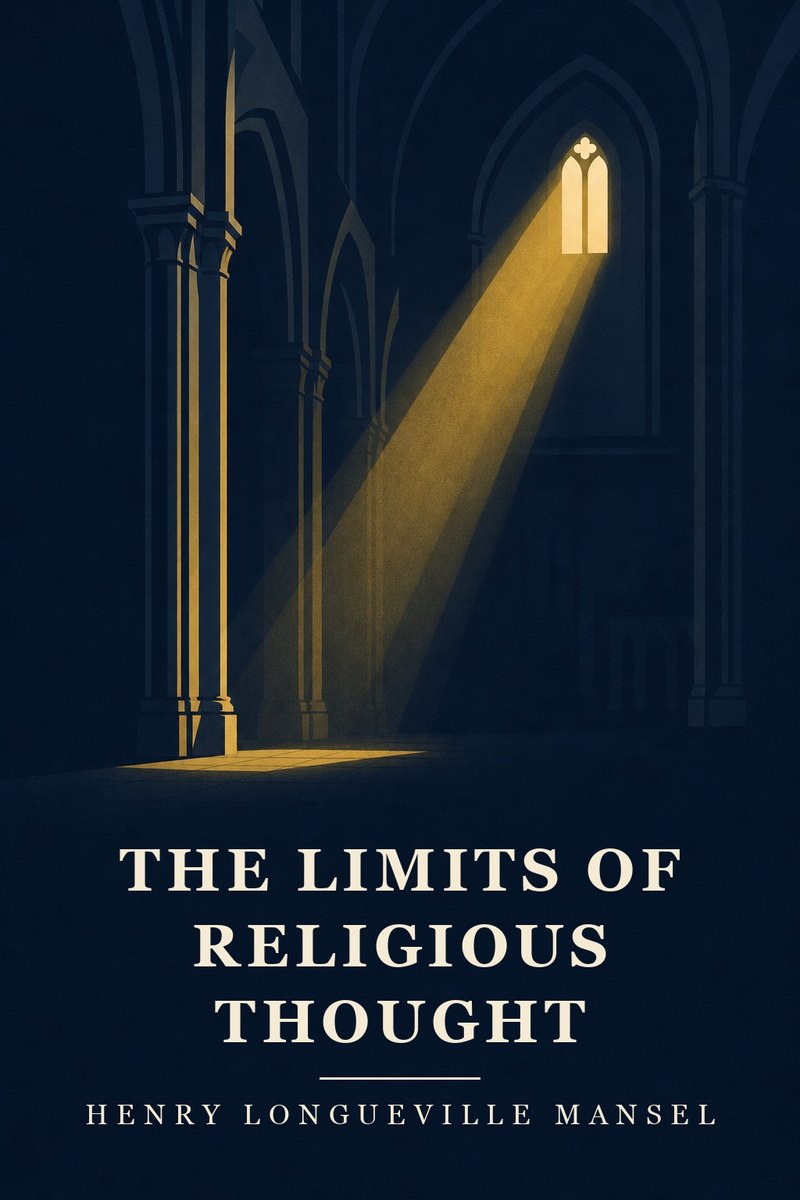
The Limits of Religious Thought

The Limits of Religious Thought

Henry Longueville Mansel (1820–1871) was an English philosopher and Anglican clergyman. A fellow of St John's College, Oxford, and later Dean of St Paul's, London, he applied the philosophy of Kant and Hamilton to theology. His 1858 Bampton Lectures, The Limits of Religious Thought — the work in our library — argued that human reason cannot comprehend the Infinite directly and that revealed truth must be received as regulative rather than speculative knowledge.

Free

Free: get it — here or in the Christian Classics app — and it's yours to read and listen to on every device you sign in to. About a tenth of it can be read here first, free.

First published
1858
Category
Theology
Length
114k words · about 8 hours
Chapters
20

About this book

Henry Longueville Mansel's Bampton Lectures of 1858, an influential philosophical defense of revealed religion. Mansel argues that the human mind cannot comprehend the Absolute and Infinite directly, so reason must receive revelation humbly rather than sit in judgment on it. The lectures provoked wide debate and remain a notable nineteenth-century attempt to mark out the boundaries of theological knowledge.

Contents

  1. Quotations
  2. Extract from The Last Will and Testament of the Rev. John Bampton, Canon of Salisbury.
  3. Publisher’s Advertisement to the American Edition.
  4. Preface to the Third Edition.
  5. The Limits of Religious Thought Examined. · Lecture I.
  6. The Limits of Religious Thought Examined. · Lecture II. 🔒
  7. The Limits of Religious Thought Examined. · Lecture III. 🔒
  8. The Limits of Religious Thought Examined. · Lecture IV. 🔒
  9. The Limits of Religious Thought Examined. · Lecture V. 🔒
  10. The Limits of Religious Thought Examined. · Lecture VI. 🔒
  11. The Limits of Religious Thought Examined. · Lecture VII. 🔒
  12. The Limits of Religious Thought Examined. · Lecture VIII. 🔒
  13. Notes - Lecture I. 🔒
  14. Notes - Lecture II. 🔒
  15. Notes - Lecture III. 🔒
  16. Notes - Lecture IV. 🔒
  17. Notes - Lecture V. 🔒
  18. Notes - Lecture VI. 🔒
  19. Notes - Lecture VII. 🔒
  20. Notes - Lecture VIII. 🔒

Reading groups

🌐 Public discussionOpen to every reader of this book

More in Theology

View all