Pilgrim Library Christian Classics
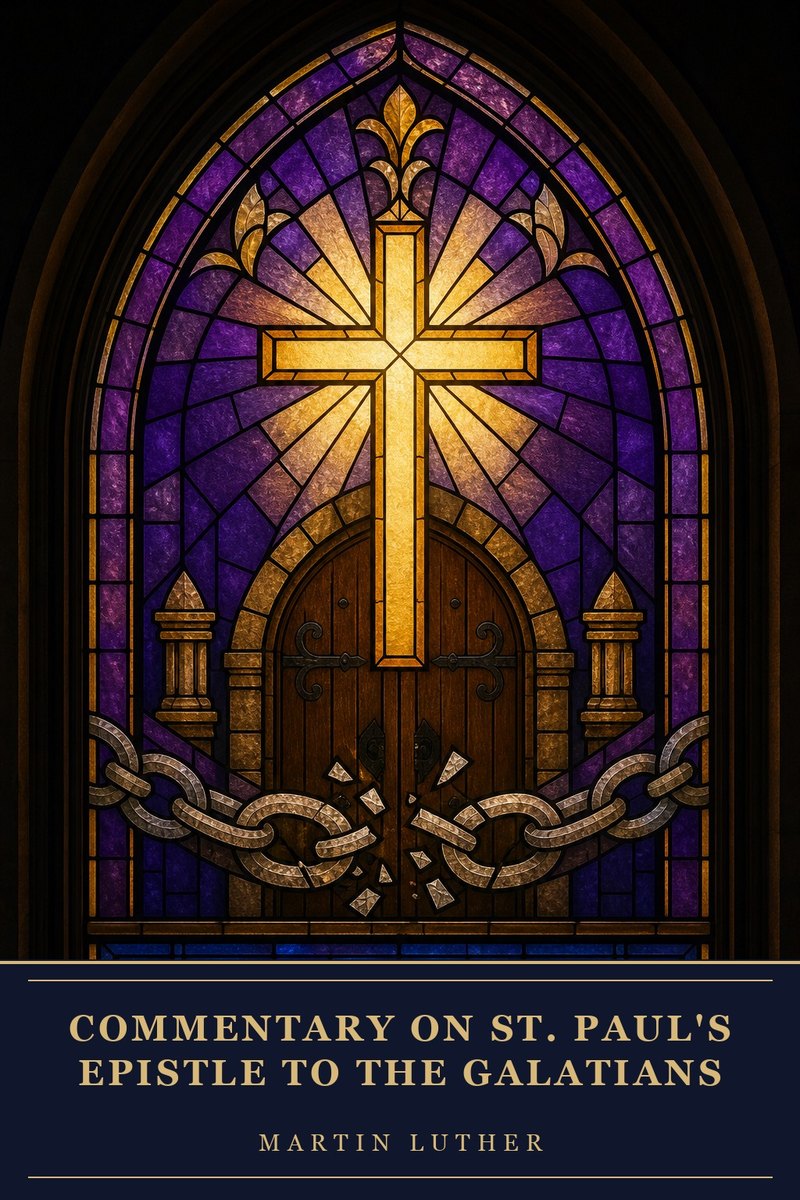
Commentary on St. Paul's Epistle to the Galatians

Commentary on St. Paul's Epistle to the Galatians

Martin Luther (1483–1546) was a German Augustinian friar and professor at Wittenberg whose protest against indulgences — the Ninety-five Theses of 1517 — ignited the Protestant Reformation. Excommunicated and outlawed, he translated the New Testament into German and wrote treatises, hymns, catechisms, and commentaries that reshaped the Western church. Our library holds his Galatians commentary, A Treatise on Good Works, his sermons, and the Ninety-five Theses themselves.

Free

Free: get it — here or in the Christian Classics app — and it's yours to read and listen to on every device you sign in to. About a tenth of it can be read here first, free.

First published
1535
Category
Theology
Length
86k words · about 6 hours
Chapters
20
Modernized version
In the reader: the Original, the Modernized text in present-day English, or both side by side. On average, the Modernized text keeps about 92% of the original wording.
Narration
🎧 Volunteer Readers

About this book

Martin Luther's great commentary on Galatians, published in 1535 from his lectures on the epistle. No book of Luther's sets out his central teaching more fully: the law exposes sin, and sinners are justified by faith in Christ alone, apart from works. Vehement, joyful, and deeply personal, it remains the classic Reformation exposition of Paul's most combative letter.

Contents

  1. Preface
  2. From Luther’s Introduction, 1538
  3. Galatians 1
  4. Galatians 2 · Part 1 🔒
  5. Galatians 2 · Part 2 🔒
  6. Galatians 2 · Part 3 🔒
  7. Galatians 3 · Part 1 🔒
  8. Galatians 3 · Part 2 🔒
  9. Galatians 3 · Part 3 🔒
  10. Galatians 3 · Part 4 🔒
  11. Galatians 3 · Part 5 🔒
  12. Galatians 4 · Part 1 🔒
  13. Galatians 4 · Part 2 🔒
  14. Galatians 4 · Part 3 🔒
  15. Galatians 4 · Part 4 🔒
  16. Galatians 5 · Part 1 🔒
  17. Galatians 5 · Part 2 🔒
  18. Galatians 5 · Part 3 🔒
  19. Galatians 5 · Part 4 🔒
  20. Galatians 6 🔒

Reading groups

🌐 Public discussionOpen to every reader of this book

More by Martin Luther

View all

More in Theology

View all