Pilgrim Library Christian Classics
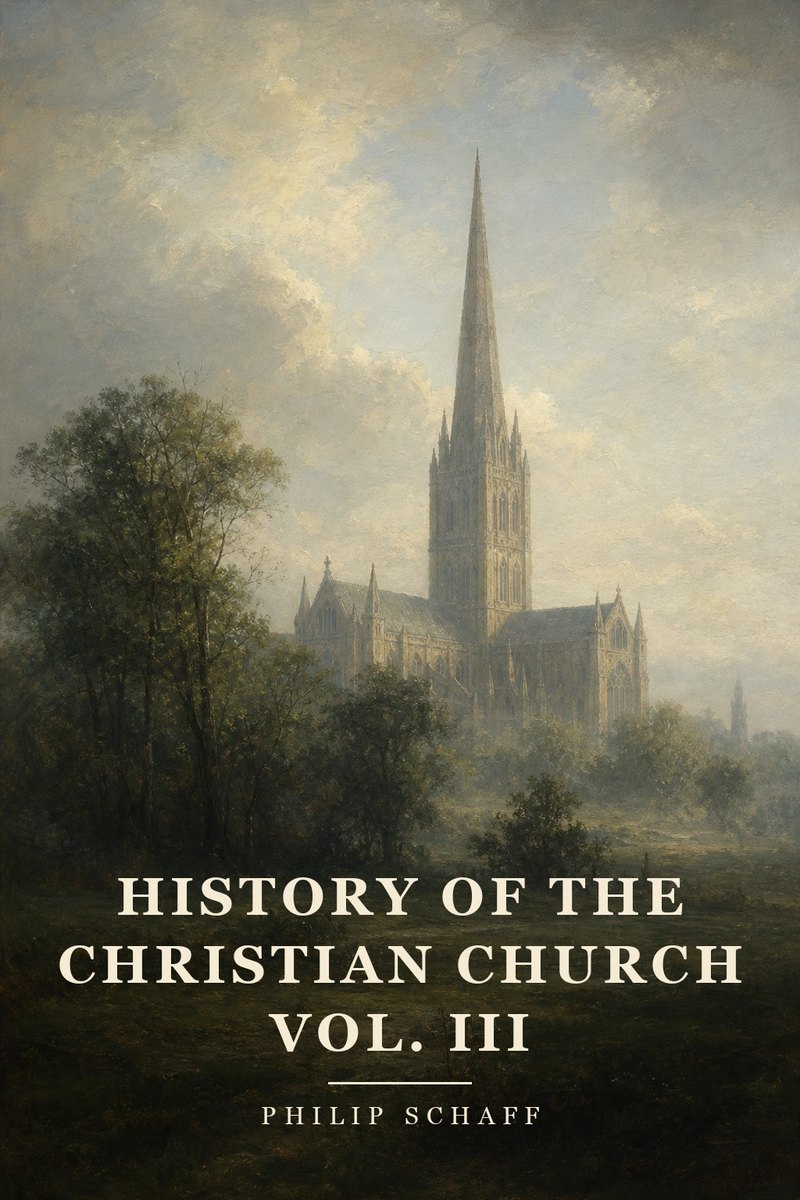
History of the Christian Church, Volume III: Nicene and Post-Nicene Christianity. A.D. 311-600

History of the Christian Church, Volume III: Nicene and Post-Nicene Christianity. A.D. 311-600

Philip Schaff (1819–1893) was a Swiss-born church historian who taught at Mercersburg and later at Union Theological Seminary in New York. A bridge between German scholarship and the English-speaking church, he founded the American Society of Church History and edited vast reference works. Our library's Nicene and Post-Nicene Fathers series — which he conceived and edited — together with his History of the Christian Church and Creeds of Christendom, came largely through his labors.

Free

Free: get it — here or in the Christian Classics app — and it's yours to read and listen to on every device you sign in to. About a tenth of it can be read here first, free.

First published
1882
Length
294k words · about 20 hours
Chapters
191
Modernized version
In the reader: the Original, the Modernized text in present-day English, or both side by side. On average, the Modernized text keeps about 91% of the original wording.
About this book

The third volume of Philip Schaff's History of the Christian Church, covering the Nicene and post-Nicene centuries, A.D. 311-600. Here are the empire's turn under Constantine, the Arian controversy, the great councils, and fathers such as Athanasius, Chrysostom, and Augustine. Schaff's sympathy and learning are on full display.

Contents

  1. Preface to the Third Revision
  2. Nicene and Post-Nicene Christianity
  3. Sources
  4. Later Literature
  5. Introduction and General View
  6. Downfall of Heathenism and Victory of Christianity in the Roman Empire
  7. Constantine The Great. a.d. 306-337
  8. The Sons of Constantine. a.d. 337-361
  9. Julian the Apostate, and the Reaction of Paganism. a.d. 361-363
  10. From Jovian to Theodosius. a.d. 363-392
  11. Theodosius the Great and his Successors. a.d. 392-550
  12. The Downfall of Heathenism
  13. Heathen Polemics. New Objections
  14. Julian's Attack upon Christianity
  15. The Heathen Apologetic Literature
  16. Christian Apologists and Polemics
  17. Augustine's City of God. Salvianus
  18. Alliance of Church and State and Its Influence on Public Morals and Religion
  19. The New Position of the Church in the Empire
  20. Rights and Privileges of the Church. Secular Advantages
  21. Support of the Clergy 🔒
  22. Episcopal Jurisdiction and Intercession 🔒
  23. Legal Sanction of Sunday 🔒
  24. Influence of Christianity on Civil Legislation. The Justinian Code 🔒
  25. Elevation of Woman and the Family 🔒
  26. Social Reforms. The Institution of Slavery 🔒
  27. Abolition of Gladiatorial Shows 🔒
  28. Evils of the Union of Church and State. Secularization of the Church 🔒
  29. Worldliness and Extravagance 🔒
  30. Byzantine Court Christianity 🔒
  31. Intrusion of Politics into Religion 🔒
  32. The Emperor-Papacy and the Hierarchy 🔒
  33. Restriction of Religious Freedom, and Beginnings of Persecution of Heretics 🔒
  34. The Rise and Progress of Monasticism 🔒
  35. Origin of Christian Monasticism. Comparison with other forms of Asceticism 🔒
  36. Development of Monasticism 🔒
  37. Nature and Aim of Monasticism 🔒
  38. Monasticism and the Bible 🔒
  39. Lights and Shades of Monastic Life 🔒
  40. Position of Monks in the Church 🔒
  41. Influence and Effect of Monasticism 🔒
  42. Paul of Thebes and St. Anthony 🔒
  43. Spread of Anchoretism. Hilarion 🔒
  44. St. Symeon and the Pillar Saints 🔒
  45. Pachomius and the Cloister life 🔒
  46. Fanatical and Heretical Monastic Societies in The East 🔒
  47. Monasticism in the West. Athanasius, Ambrose, Augustine, Martin of Tours 🔒
  48. St. Jerome as a Monk 🔒
  49. St. Paula 🔒
  50. Benedict of Nursia 🔒
  51. The Rule of St. Benedict 🔒
  52. The Benedictines. Cassiodorus 🔒
  53. Opposition to Monasticism. Jovinian 🔒
  54. Helvidius, Vigilantius, and Aerius 🔒
  55. The Hierarchy and Polity of the Church 🔒
  56. Schools of the Clergy 🔒
  57. Clergy and Laity. Elections 🔒
  58. Marriage and Celibacy of the Clergy 🔒
  59. Moral Character of the Clergy in general 🔒
  60. The Lower Clergy 🔒
  61. The Bishops 🔒
  62. Organization of the Hierarchy: Country Bishop, City Bishops, and Metropolitans 🔒
  63. The Patriarchs 🔒
  64. Synodical Legislation on the Patriarchal Power and Jurisdiction 🔒
  65. The Rival Patriarchs of Old and New Rome 🔒
  66. The Latin Patriarch 🔒
  67. Conflicts and Conquests of the Latin Patriarchate 🔒
  68. The Papacy 🔒
  69. Opinions of the Fathers 🔒
  70. The Decrees of Councils on the Papal Authority 🔒
  71. Leo the Great. a.d. 440-461 🔒
  72. The Papacy from Leo I to Gregory I. a.d. 461-590 🔒
  73. The Synodical System. The Ecumenical Councils 🔒
  74. List of the Ecumenical Councils of the Ancient Church 🔒
  75. Books of Ecclesiastical Law 🔒
  76. Decline of Discipline 🔒
  77. The Donatist Schism. External History 🔒
  78. Augustine and the Donatists. Their Persecution and Extinction 🔒
  79. Internal History of the Donatist Schism. Dogma of the Church 🔒
  80. The Roman Schism of Damasus and Ursinus 🔒
  81. The Meletian Schism at Antioch 🔒
  82. The Revolution in Cultus 🔒
  83. The Civil and Religious Sunday 🔒
  84. The Church Year 🔒
  85. The Christmas Cycle 🔒
  86. The Easter Cycle 🔒
  87. The Time of the Easter Festival 🔒
  88. The Cycle of Pentecost 🔒
  89. The Exaltation of the Virgin Mariology 🔒
  90. Mariolatry 🔒
  91. The Festivals of Mary 🔒
  92. The Worship of Martyrs and Saints 🔒
  93. Festivals of the Saints 🔒
  94. The Christian Calendar. The Legends of the Saints. The Acta Sanctorum 🔒
  95. Worship of Relics. Dogma of the Resurrection. Miracles of Relics 🔒
  96. Observations on the Miracles of the Nicene Age 🔒
  97. Processions and Pilgrimages 🔒
  98. Public Worship of the Lord's Day. Scripture-Reading and Preaching 🔒
  99. The Sacraments in General 🔒
  100. Baptism 🔒
  101. Confirmation 🔒
  102. Ordination 🔒
  103. The Sacrament of the Eucharist 🔒
  104. The Sacrifice of the Eucharist 🔒
  105. The Celebration of the Eucharist 🔒
  106. The Liturgies. Their Origin and Contents 🔒
  107. The Oriental Liturgies 🔒
  108. The Occidental Liturgies 🔒
  109. Liturgical Vestments 🔒
  110. Religion and Art 🔒
  111. Church Architecture 🔒
  112. The Consecration of Churches 🔒
  113. Interior Arrangement of Churches 🔒
  114. Architectural Style. The Basilicas 🔒
  115. The Byzantine Style 🔒
  116. Baptisteries, Grave-Chapels, and Crypts 🔒
  117. Crosses and Crucifixes 🔒
  118. Images of Christ 🔒
  119. Images of Madonna and Saints 🔒
  120. Consecrated Gifts 🔒
  121. Church Poetry and Music 🔒
  122. The Poetry of the Oriental Church 🔒
  123. The Latin Hymn 🔒
  124. The Latin Poets and Hymns 🔒
  125. General Observations. Doctrinal Importance of the Period. Influence of the Ancient Philosophy 🔒
  126. Sources of Theology. Scripture and Tradition 🔒
  127. The Arian Controversy down to the Council of Nicaea, 318-325 🔒
  128. The Council of Nicaea, 325 🔒
  129. The Arian and Semi-Arian Reaction, a.d. 325-361 🔒
  130. The Final Victory of Orthodoxy, and the Council of Constantinople, 381 🔒
  131. The Theological Principles involved: Import of the Controversy 🔒
  132. Arianism 🔒
  133. Semi-Arianism 🔒
  134. Revived Sabellianism. Marcellus and Photinus 🔒
  135. The Nicene Doctrine of the Consubstantiality of the Son with the Father 🔒
  136. The Doctrine of the Holy Spirit 🔒
  137. The Nicene and Constantinopolitan Creed 🔒
  138. The Nicene, Doctrine of the Trinity. The Trinitarian Terminology 🔒
  139. The Post-Nicene Trinitarian Doctrine of Augustine 🔒
  140. The Athanasian Creed 🔒
  141. The Orgenistic Controversy in Palestine. Epiphanius, Rufinus, and Jerome, a.d. 394-399 🔒
  142. The Origenistic Controversy in Egypt and Constantinople. Theophilus and Chrysostom a.d. 399-407 🔒
  143. General View. Alexandrian and Antiochian Schools 🔒
  144. The Apollinarian Heresy, a.d. 362-381 🔒
  145. The Nestorian Controversy, a.d. 428-431 🔒
  146. The Ecumenical Council of Ephesus, a.d. 431. The Compromise 🔒
  147. The Nestorians 🔒
  148. The Eutychian Controversy. The Council of Robbers, a.d. 449 🔒
  149. The Ecumenical Council of Chalcedon, A.D. 451 🔒
  150. The Orthodox Christology--Analysis and Criticism 🔒
  151. The Monophysite Controversies 🔒
  152. The Three, Chapters, and the Fifth Ecumenical Council, A.D. 553 🔒
  153. The Monophysite Sects: Jacobites, Copts, Abyssinians, Armenians, Maronites 🔒
  154. Character of the Pelagian Controversy 🔒
  155. External History of the Pelagian Controversy, A.D. 411-431 🔒
  156. The Pelagian Controversy in Palestine 🔒
  157. Position of the Roman Church. Condemnation of Pelagianism 🔒
  158. The Pelagian System: Primitive State and Freedom of Man; the Fall 🔒
  159. The Pelagian System Continued: Doctrine, of Human Ability and Divine Grace 🔒
  160. The Augustinian System: The Primitive State of Man, and Free Will 🔒
  161. The Augustinian System: The Fall and its Consequences 🔒
  162. The Augustinian System: Original Sin, and the Origin of the Human Soul 🔒
  163. Arguments for the Doctrine of Original Sin and Hereditary Guilt 🔒
  164. Answers to Pelagian Objections 🔒
  165. Augustine's Doctrine of Redeeming Grace 🔒
  166. The Doctrine of Predestination 🔒
  167. Semi-Pelagianism 🔒
  168. Victory of Semi-Augustinianism. Council of Orange, A.D. 529 🔒
  169. Eusebius of Caesarea 🔒
  170. The Church Historians after Eusebius 🔒
  171. Athanasius the Great 🔒
  172. Basil the Great 🔒
  173. Gregory of Nyssa 🔒
  174. Gregory Nazianzen 🔒
  175. Didymus of Alexandria 🔒
  176. Cyril of Jerusalem 🔒
  177. Epiphanius 🔒
  178. John Chrysostom 🔒
  179. Cyril of Alexandria 🔒
  180. Ephraem the Syrian 🔒
  181. Lactantius 🔒
  182. Hilary of Poitiers 🔒
  183. Ambrose 🔒
  184. Jerome as a Divine and Scholar 🔒
  185. The Works of Jerome 🔒
  186. Augustine 🔒
  187. The Works of Augustine 🔒
  188. The Influence of Augustine upon Posterity and his Relation to Catholicism and Protestantism 🔒
  189. Addenda Et Corrigenda 🔒
  190. Addenda to the Fifth Edition. 1893 🔒
  191. Addenda Et Corrigenda 🔒

Reading groups

🌐 Public discussionOpen to every reader of this book

More by Philip Schaff

View all

More in Church History

View all