Pilgrim Library Christian Classics
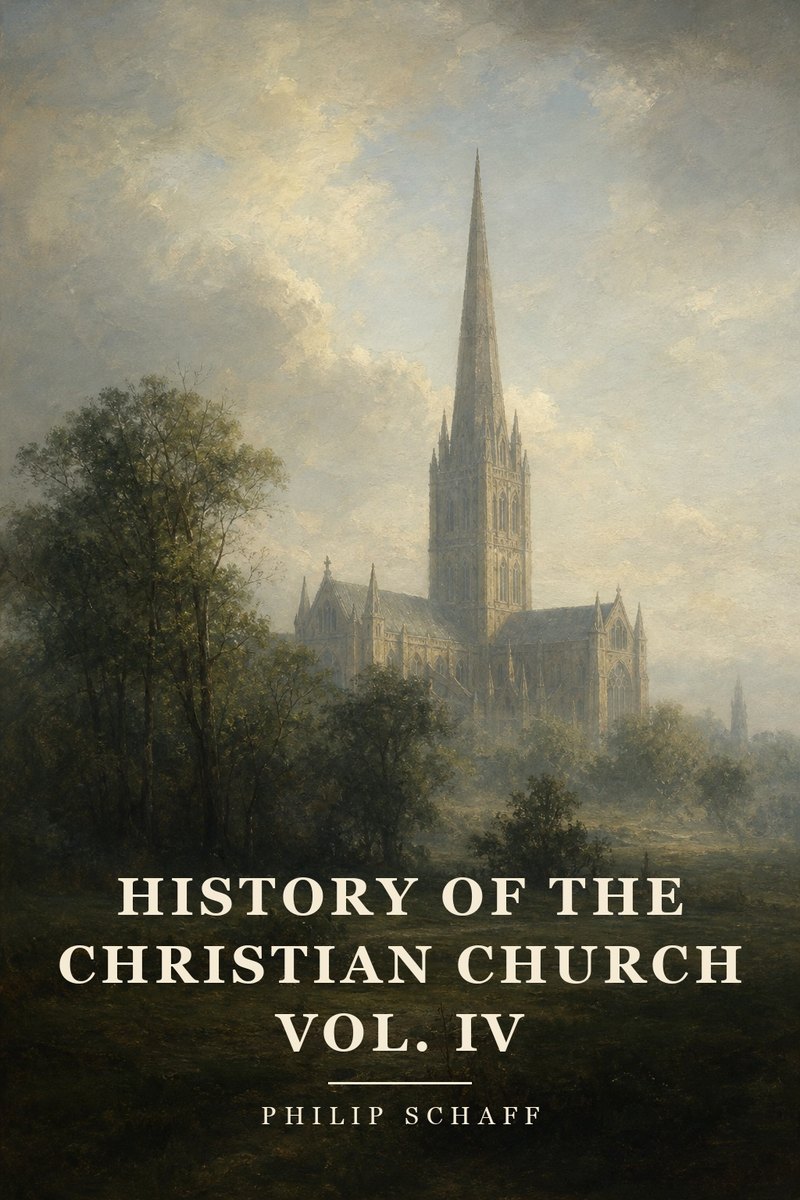
History of the Christian Church, Volume IV: Mediaeval Christianity. A.D. 590-1073

History of the Christian Church, Volume IV: Mediaeval Christianity. A.D. 590-1073

Philip Schaff (1819–1893) was a Swiss-born church historian who taught at Mercersburg and later at Union Theological Seminary in New York. A bridge between German scholarship and the English-speaking church, he founded the American Society of Church History and edited vast reference works. Our library's Nicene and Post-Nicene Fathers series — which he conceived and edited — together with his History of the Christian Church and Creeds of Christendom, came largely through his labors.

Free

Free: get it — here or in the Christian Classics app — and it's yours to read and listen to on every device you sign in to. About a tenth of it can be read here first, free.

First published
1882
Length
229k words · about 15 hours
Chapters
182
Modernized version
In the reader: the Original, the Modernized text in present-day English, or both side by side. On average, the Modernized text keeps about 91% of the original wording.
About this book

The fourth volume of Philip Schaff's History of the Christian Church, covering mediaeval Christianity from A.D. 590 to 1073. Schaff treats the age of Gregory the Great, the conversion of northern Europe, the rise of Islam, and the growing power of the papacy. A balanced guide to a long, complicated period.

Contents

  1. Sources and Literature
  2. The Middle Age. Limits and General Character
  3. The Nations of Mediaeval Christianity. The Kelt, the Teuton, and the Slav
  4. Genius of Mediaeval Christianity
  5. Periods of the Middle Age
  6. Character of Mediaeval Missions
  7. Literature
  8. The Britons
  9. The Anglo-Saxons
  10. The Mission of Gregory and Augustin. Conversion of Kent, a.d. 595-604
  11. Antagonism of the Saxon and British Clergy
  12. Conversion of the Other Kingdoms of the Heptarchy
  13. Conformity to Row Established. Wilfrid, Theodore, Bede
  14. The Conversion of Ireland. St. Patrick and St. Bridget
  15. The Irish Church after St. Patrick
  16. Subjection of Ireland to English and Roman Rule
  17. The Conversion of Scotland. St. Ninian and St. Kentigern
  18. St. Columba and the Monastery of Iona
  19. The Culdees
  20. Extinction of the Keltic Church, and Triumph of Rome under King David I
  21. Arian Christianity among the Goths and other German Tribes
  22. Conversion of Clovis and the Franks 🔒
  23. Columbanus and the Irish Missionaries on the Continent 🔒
  24. German Missionaries before Boniface 🔒
  25. Boniface, the Apostle of Germany 🔒
  26. The Pupils of Boniface. Willibald, Gregory of Utrecht, Sturm of Fulda 🔒
  27. The Conversion of the Saxons. Charlemagne and Alcuin. The Heliand, and the Gospel-Harmony 🔒
  28. Scandinavian Heathenism 🔒
  29. The Christianization of Denmark. St. Ansgar 🔒
  30. The Christianization of Sweden 🔒
  31. The Christianization of Norway and Iceland 🔒
  32. General Survey 🔒
  33. Christian Missions among the Wends 🔒
  34. Cyrillus and Methodius, the Apostles of the Slavs. Christianization of Moravia, Bohemia and Poland 🔒
  35. The Conversion of the Bulgarians 🔒
  36. The Conversion of the Magyars 🔒
  37. The Christianization of Russia 🔒
  38. Literature 🔒
  39. Statistics and Chronological Table 🔒
  40. Position of Mohammedanism in Church History 🔒
  41. The Home, and the Antecedents of Islâm 🔒
  42. Life and Character of Mohammed 🔒
  43. The Conquests of Islâm 🔒
  44. The Koran, and the Bible 🔒
  45. The Mohammedan Religion 🔒
  46. Mohammedan Worship 🔒
  47. Christian Polemics against Mohammedanism. Note on Mormonism 🔒
  48. General Literature on the Papacy 🔒
  49. Chronological Table of the Popes, Anti-Popes, and Roman Emperors from Gregory I. to Leo XIII 🔒
  50. Gregory the Great. a.d. 590-604 🔒
  51. Gregory and the Universal Episcopate 🔒
  52. The Writings of Gregory 🔒
  53. The Papacy from Gregory I to Gregory II a.d. 604-715 🔒
  54. From Gregory II to Zacharias. a.d. 715-741 🔒
  55. Alliance of the Papacy with the New Monarchy of the Franks. Pepin and the Patrimony of St. Peter. A.d. 741-755 🔒
  56. Charles the Great. a.d. 768-814 🔒
  57. Founding of the Holy Roman Empire, a.d. 800. Charlemagne and Leo II 🔒
  58. Survey of the History of the Holy Roman Empire 🔒
  59. The Papacy and the Empire from the Death of Charlemagne to Nicolas I a.d. 814-858). Note on the Myth of the Papess Joan 🔒
  60. The Pseudo-Isidorian Decretals 🔒
  61. Nicolas I., April, 858-Nov. 13, 867 🔒
  62. Hadrian II. and John VIII a.d. 867 to 882 🔒
  63. The Degradation of the Papacy in the Tenth Century 🔒
  64. The Interference of Otho the Great 🔒
  65. The Second Degradation of the Papacy from Otho I to Henry III. a.d. 97-1046 🔒
  66. Henry III and the Synod of Sutri. Deposition of three rival Popes. a.d. 1046 🔒
  67. Sources and Literature 🔒
  68. The Consensus and Dissensus between the Greek and Latin Churches 🔒
  69. The Causes of Separation 🔒
  70. The Patriarch and the Pope. Photius and Nicolas 🔒
  71. Progress and Completion of the Schism. Cerularius 🔒
  72. Fruitless Attempts at Reunion 🔒
  73. Literature 🔒
  74. General Character of Mediaeval Morals 🔒
  75. Clerical Morals 🔒
  76. Domestic Life 🔒
  77. Slavery 🔒
  78. Feuds and Private Wars. The Truce of God 🔒
  79. The Ordeal 🔒
  80. The Torture 🔒
  81. Christian Charity 🔒
  82. Use of Convents in the Middle Ages 🔒
  83. St. Benedict. St. Nilus. St. Romuald 🔒
  84. The Convent of Cluny 🔒
  85. The Penitential Books 🔒
  86. Ecclesiastical Punishments. Excommunication, Anathema, Interdict 🔒
  87. Penance and Indulgence 🔒
  88. Legislation 🔒
  89. The Roman Law 🔒
  90. The Capitularies of Charlemagne 🔒
  91. English Legislation 🔒
  92. The Mass 🔒
  93. The Sermon 🔒
  94. Church Poetry. Greek Hymns and Hymnists 🔒
  95. Latin Hymnody. Literature 🔒
  96. Latin Hymns and Hymnists 🔒
  97. The Seven Sacraments 🔒
  98. The Organ and the Bell 🔒
  99. The Worship of Saints 🔒
  100. The Worship of Images. Literature. Different Theories 🔒
  101. The Iconoclastic War, and the Synod of 754 🔒
  102. The Restoration of Image-Worship by the Seventh Oecumenical Council, 787 🔒
  103. Iconoclastic Reaction, and Final Triumph of Image-Worship, a.d. 842 🔒
  104. The Caroline Books and the Frankish Church on Image-Worship 🔒
  105. Evangelical Reformers. Agobardus of Lyons, and Claudius of Turin 🔒
  106. General Survey 🔒
  107. The Controversy on the Procession of the Holy Spirit 🔒
  108. The Arguments for and against the Filioque 🔒
  109. The Monotheletic Controversy 🔒
  110. The Doctrine of Two Wills in Christ 🔒
  111. History of Monotheletism and Dyotheletism 🔒
  112. The Sixth Oecumenical Council. a.d. 680 🔒
  113. The Heresy of Honorius 🔒
  114. Concilium Quinisextum. a.d. 692 🔒
  115. Reaction of Monotheletism. The Maronites 🔒
  116. The Adoptionist Controversy. Literature 🔒
  117. History of Adoptionism 🔒
  118. Doctrine of Adoptionism 🔒
  119. The Predestinarian Controversy 🔒
  120. Gottschalk and Babanus Maurus 🔒
  121. Gottschalk and Hincmar 🔒
  122. The Contending Theories on Predestination, and the Victory of Semi-Augustinianism 🔒
  123. The Doctrine of Scotus Erigena 🔒
  124. The Eucharistic Controversies. Literature 🔒
  125. The Two Theories of the Lord's Supper 🔒
  126. The Theory of Paschasius Radbertus 🔒
  127. The Theory of Ratramnus 🔒
  128. The Berengar Controversy 🔒
  129. Berengar's Theory of the Lord's Supper 🔒
  130. Lanfranc and the Triumph of Transubstantiation 🔒
  131. The Paulicians 🔒
  132. The Euchites and other Sects in the East 🔒
  133. The New Manichaeans in the West 🔒
  134. Literature 🔒
  135. Literary Character of the Early Middle Ages 🔒
  136. Learning in the Eastern Church 🔒
  137. Christian Platonism and the Pseudo-Dionysian Writings 🔒
  138. Prevailing Ignorance in the Western Church 🔒
  139. Educational Efforts of the Church 🔒
  140. Patronage of Letters by Charles the Great, and Charles the Bald 🔒
  141. Alfred the Great, and Education in England 🔒
  142. Chronological List of the Principal Ecclesiastical Writers from the Sixth to the Twelfth Century 🔒
  143. St. Maximus Confessor 🔒
  144. John of Damascus 🔒
  145. Photius, Patriarch of Constantinople 🔒
  146. Simeon Metaphrastes 🔒
  147. Oecumenius 🔒
  148. Theophylact 🔒
  149. Michael Psellus 🔒
  150. Euthymius Zigabenus 🔒
  151. Eustathius of Thessalonica 🔒
  152. Nicetas Acominatos 🔒
  153. Cassiodorus 🔒
  154. St. Gregory of Tours 🔒
  155. St. Isidore of Seville 🔒
  156. The Venerable Bede (Baeda) 🔒
  157. Paul the Deacon 🔒
  158. St. Paulinus of Aquileia 🔒
  159. Alcuin 🔒
  160. St. Liudger 🔒
  161. Theodulph of Orleans 🔒
  162. St. Eigil 🔒
  163. Amalarius 🔒
  164. Einhard 🔒
  165. Smaragdus 🔒
  166. Jonas of Orleans 🔒
  167. Rabanus Maurus 🔒
  168. Haymo 🔒
  169. Walahfrid Strabo 🔒
  170. Florus Magister, of Lyons 🔒
  171. Servatus Lupus 🔒
  172. Druthmar 🔒
  173. St. Paschasius Radbertus 🔒
  174. Patramnus 🔒
  175. Hincmar of Rheims 🔒
  176. Johannes Scotus Erigena 🔒
  177. Anastasius 🔒
  178. Ratherius of Verona 🔒
  179. Gerbert (Sylvester II.) 🔒
  180. Fulbert of Chartres 🔒
  181. Rodulfus Glaber. Adam of Bremen 🔒
  182. St. Peter Damiani 🔒

Reading groups

🌐 Public discussionOpen to every reader of this book

More by Philip Schaff

View all

More in Church History

View all