Pilgrim Library Christian Classics
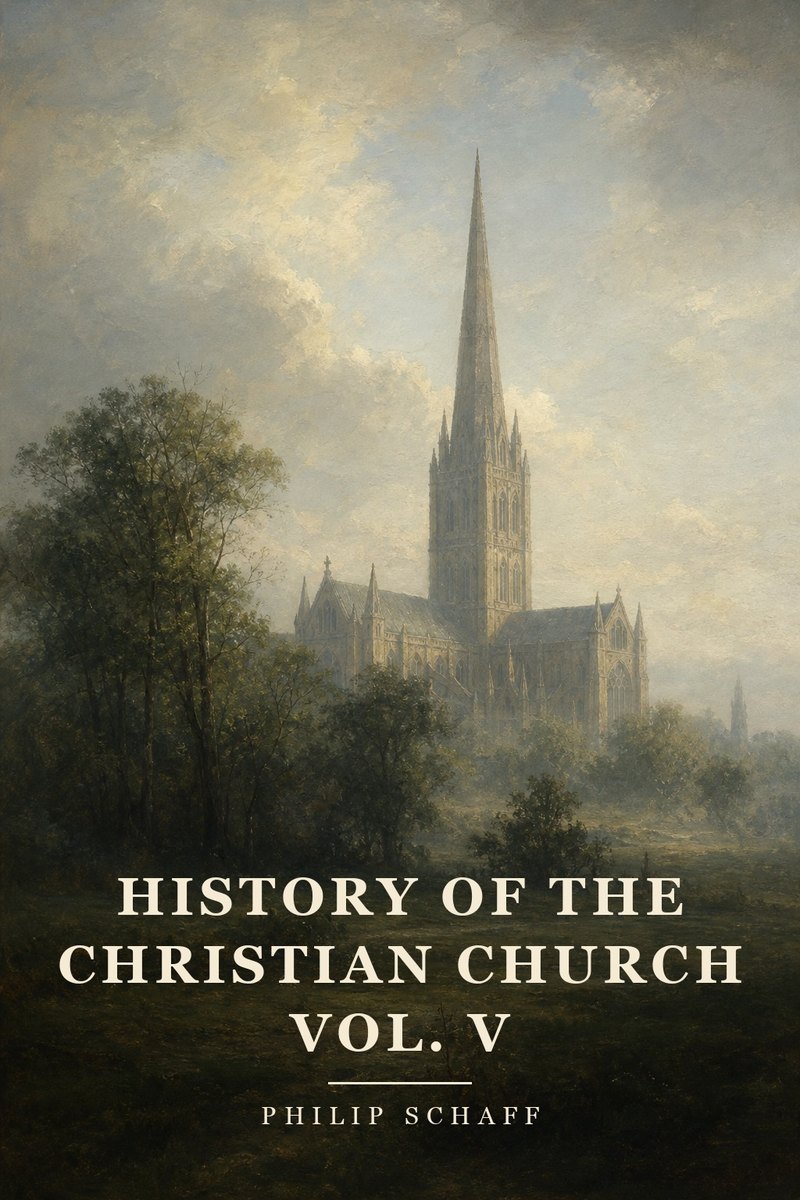
History of the Christian Church, Volume V: The Middle Ages. A.D. 1049-1294

History of the Christian Church, Volume V: The Middle Ages. A.D. 1049-1294

Philip Schaff (1819–1893) was a Swiss-born church historian who taught at Mercersburg and later at Union Theological Seminary in New York. A bridge between German scholarship and the English-speaking church, he founded the American Society of Church History and edited vast reference works. Our library's Nicene and Post-Nicene Fathers series — which he conceived and edited — together with his History of the Christian Church and Creeds of Christendom, came largely through his labors.

Free

Free: get it — here or in the Christian Classics app — and it's yours to read and listen to on every device you sign in to. About a tenth of it can be read here first, free.

First published
1882
Length
238k words · about 16 hours
Chapters
139
Modernized version
In the reader: the Original, the Modernized text in present-day English, or both side by side. On average, the Modernized text keeps about 92% of the original wording.
About this book

The fifth volume of Philip Schaff's History of the Christian Church, covering the Middle Ages from A.D. 1049 to 1294. Its subjects include Gregory VII, the Crusades, the monastic orders, and the rise of scholastic theology. Schaff writes with unusual fairness toward an age Protestants have often dismissed.

Contents

  1. The Middle Ages
  2. General Literature
  3. Introductory Survey
  4. Sources and Literature on Chapters I. and II
  5. Hildebrand and his Training
  6. Hildebrand and Leo IX. 1049-1054
  7. Victor II. and Stephen IX. (X.). 1055-1058
  8. Nicolas II. and the Cardinals. 1059-1061
  9. The War against Clerical Marriage
  10. Alexander II. and the Schism of Cadalus. 1061-1073
  11. Hildebrand elected Pope. His Views on the Situation
  12. The Gregorian Theocracy
  13. Gregory VII. as a Moral Reformer. Simony and Clerical Marriage
  14. The Enforcement of Sacerdotal Celibacy
  15. The War over Investiture
  16. Gregory VII. and Henry IV
  17. Canossa. 1077
  18. Renewal of the Conflict. Two Kings and Two Popes
  19. Death of Gregory VII
  20. Victor III. and Urban II. 1086-1099
  21. Pascal II. and Henry V. 1099-1118
  22. The Concordat of Worms. 1122
  23. The Conflict of the Hierarchy in England. William the Conqueror and Lanfranc 🔒
  24. William Rufus and Anselm 🔒
  25. Anselm and Henry I 🔒
  26. Innocent II., 1130-1143, and Eugene III., 1145-1153 🔒
  27. Arnold of Brescia 🔒
  28. The Popes and the Hohenstaufen 🔒
  29. Adrian IV. and Frederick Barbarossa 🔒
  30. Alexander III. in Conflict with Barbarossa 🔒
  31. The Peace of Venice. 1177 🔒
  32. Thomas Becket and Henry II of England 🔒
  33. The Archbishop and the King 🔒
  34. The Martyrdom of Thomas Becket. Dec. 29, 1170 🔒
  35. The Effects of Becket's Murder 🔒
  36. Literature 🔒
  37. Innocent's Training and Election 🔒
  38. Innocent's Theory of the Papacy 🔒
  39. Innocent and the German Empire 🔒
  40. Innocent and King John of England 🔒
  41. Innocent and Magna Charta 🔒
  42. The Fourth Lateran Council, 1215 🔒
  43. The Papacy From The Death Of Innocent Iii. To Boniface Viii. 1216-1294 🔒
  44. The Papal Conflict with Frederick II Begun 🔒
  45. Gregory IX. and Frederick II. 1227-1241 🔒
  46. The First Council of Lyons and the Close of Frederick's Career. 1241-1250 🔒
  47. The Last of the Hohenstaufen 🔒
  48. The Empire and Papacy at Peace. 1271-1294 🔒
  49. Literature on the Crusades as a Whole 🔒
  50. Character and Causes of the Crusades 🔒
  51. The Call to the Crusades 🔒
  52. The First Crusade and the Capture of Jerusalem 🔒
  53. The Latin Kingdom of Jerusalem. 1099-1187 🔒
  54. The Fall of Edessa and the Second Crusade 🔒
  55. The Third Crusade. 1189-1192 🔒
  56. The Children's Crusades 🔒
  57. The Fourth Crusade and the Capture of Constantinople. 1200-1204 🔒
  58. Frederick II. and the Fifth Crusade. 1229 🔒
  59. St. Louis and the Last Crusades. 1248, 1270 🔒
  60. The Last Stronghold of the Crusaders in Palestine 🔒
  61. Effects of the Crusades 🔒
  62. The Military Orders 🔒
  63. The Revival of Monasticism 🔒
  64. Monasticism and the Papacy 🔒
  65. The Monks of Cluny 🔒
  66. The Cistercians 🔒
  67. St. Bernard of Clairvaux 🔒
  68. The Augustinians, Carthusians, Carmelites, and other Orders 🔒
  69. Monastic Prophets 🔒
  70. The Mendicant Orders 🔒
  71. Franciscan Literature 🔒
  72. St. Francis d'Assisi 🔒
  73. The Franciscans 🔒
  74. St. Dominic and the Dominicans 🔒
  75. Literature and General Survey 🔒
  76. Missions in Northeastern Germany 🔒
  77. Missions among the Mohammedans 🔒
  78. Missions among the Mongols 🔒
  79. The Jews 🔒
  80. Literature for the Entire Chapter 🔒
  81. The Mediaeval Dissenters 🔒
  82. The Cathari 🔒
  83. Peter de Bruys and Other Independent Leaders 🔒
  84. The Amaurians and Other Isolated Sects 🔒
  85. The Beguines and Beghards 🔒
  86. The Waldenses 🔒
  87. The Crusades against the Albigenses 🔒
  88. The Inquisition. Its Origin and Purpose 🔒
  89. The Inquisition. Its Mode of Procedure and Penalties 🔒
  90. Schools 🔒
  91. Books and Libraries 🔒
  92. The Universities 🔒
  93. The University of Bologna 🔒
  94. The University of Paris 🔒
  95. Oxford and Cambridge 🔒
  96. The Cathedrals 🔒
  97. Literature and General Introduction 🔒
  98. Sources and Development of Scholasticism 🔒
  99. Realism and Nominalism 🔒
  100. Anselm of Canterbury 🔒
  101. Peter Abaelard 🔒
  102. Abaelard's Teachings and Theology 🔒
  103. Younger Contemporaries of Abaelard 🔒
  104. Peter the Lombard and the Summists 🔒
  105. Mysticism 🔒
  106. St. Bernard as a Mystic 🔒
  107. Hugo and Richard of St. Victor 🔒
  108. Alexander of Hales 🔒
  109. Albertus Magnus 🔒
  110. Thomas Aquinas 🔒
  111. Bonaventura 🔒
  112. Duns Scotus 🔒
  113. Roger Bacon 🔒
  114. Literature on the Sacraments 🔒
  115. The Seven Sacraments 🔒
  116. Baptism and Confirmation 🔒
  117. The Eucharist 🔒
  118. Eucharistic Practice and Superstition 🔒
  119. Penance and Indulgences 🔒
  120. Penance and Indulgences 🔒
  121. Extreme Unction, Ordination, and Marriage 🔒
  122. Sin and Grace 🔒
  123. The Future State 🔒
  124. The canon Law 🔒
  125. The Papal Supremacy in Church and State 🔒
  126. The Pope and the Curia 🔒
  127. Bishops 🔒
  128. The Lower Clergy 🔒
  129. The Councils 🔒
  130. Church and Clergy in England 🔒
  131. Two English Bishops 🔒
  132. The Worship of Mary 🔒
  133. The Worship of Relics 🔒
  134. The Sermon 🔒
  135. Hymns and Sacred Poetry 🔒
  136. The Religious Drama 🔒
  137. The Flagellants 🔒
  138. Demonology and the Dark Arts 🔒
  139. The Age passing Judgment upon Itself 🔒

Reading groups

🌐 Public discussionOpen to every reader of this book

More by Philip Schaff

View all

More in Church History

View all