Pilgrim Library Christian Classics
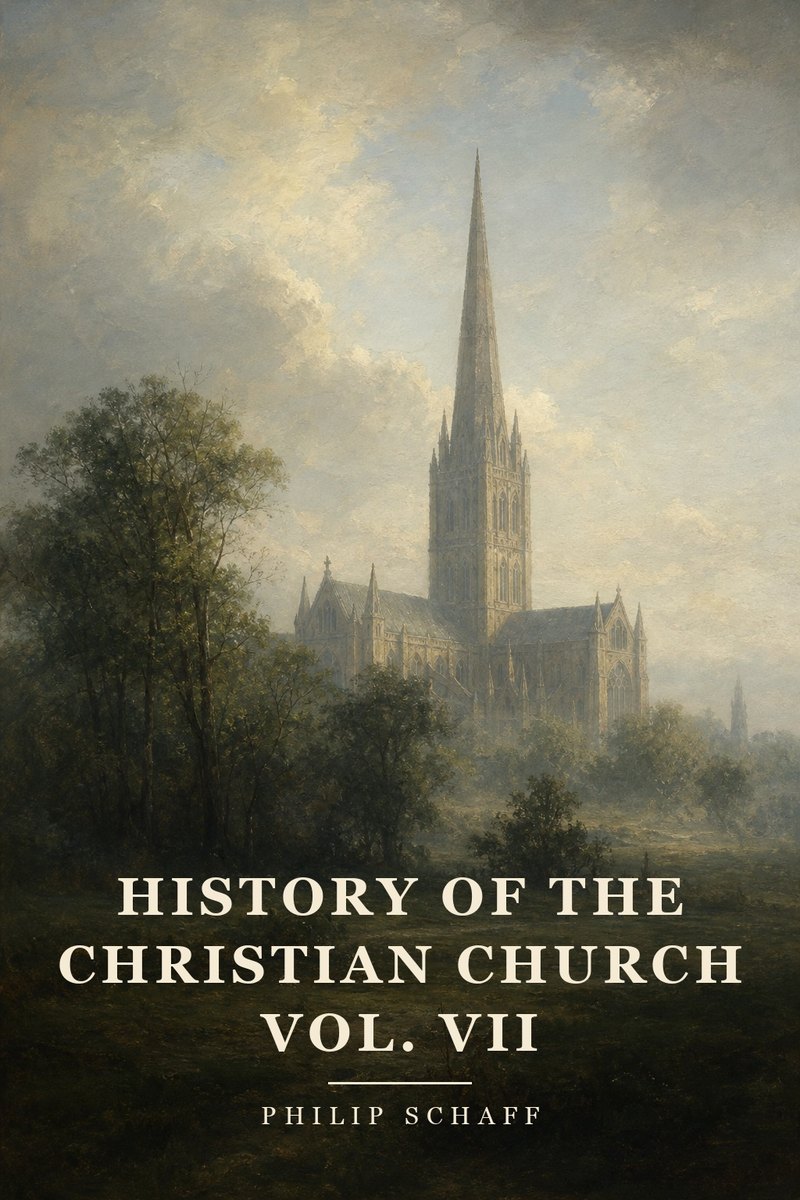
History of the Christian Church, Volume VII. Modern Christianity. The German Reformation

History of the Christian Church, Volume VII. Modern Christianity. The German Reformation

Philip Schaff (1819–1893) was a Swiss-born church historian who taught at Mercersburg and later at Union Theological Seminary in New York. A bridge between German scholarship and the English-speaking church, he founded the American Society of Church History and edited vast reference works. Our library's Nicene and Post-Nicene Fathers series — which he conceived and edited — together with his History of the Christian Church and Creeds of Christendom, came largely through his labors.

Free

Free: get it — here or in the Christian Classics app — and it's yours to read and listen to on every device you sign in to. About a tenth of it can be read here first, free.

First published
1882
Length
213k words · about 14 hours
Chapters
125
Modernized version
In the reader: the Original, the Modernized text in present-day English, or both side by side. On average, the Modernized text keeps about 89% of the original wording.
About this book

The seventh volume of Philip Schaff's History of the Christian Church, devoted to the German Reformation. Schaff narrates Luther's life and teaching, the spread of reform, and the political settlements that followed, with generous use of primary sources. A classic sympathetic account from a German-born American church historian.

Contents

  1. Modern Christianity. German Reformation.
  2. The Turning Point of Modern History
  3. Protestantism and Romanism
  4. Necessity of a Reformation
  5. The Preparations for the Reformation
  6. The Genius and Aim of the Reformation
  7. The Authority of the Scriptures
  8. Justification by Faith
  9. The Priesthood of the Laity
  10. The Reformation and Rationalism
  11. Protestantism and Denominationalism.
  12. Protestantism and Religious Liberty
  13. Religious Intolerance and Liberty in England and America 🔒
  14. Chronological Limits 🔒
  15. General Literature on the Reformation 🔒
  16. Literature of the German Reformation 🔒
  17. Germany and the Reformation 🔒
  18. The Luther Literature 🔒
  19. Luther's Youth and Training 🔒
  20. Luther in the University of Erfurt 🔒
  21. Luther's Conversion 🔒
  22. Luther as a Monk 🔒
  23. Luther and Staupitz 🔒
  24. The Victory of Justifying Faith 🔒
  25. Luther Ordained to the Priesthood 🔒
  26. Luther in Rome.14 🔒
  27. The University of Wittenberg 🔒
  28. Luther as Professor till 1517 🔒
  29. Luther and Mysticism. The Theologia Germanica 🔒
  30. The Penitential Psalms. The Eve of the Reformation 🔒
  31. The Sale of Indulgences 🔒
  32. Luther and Tetzel 🔒
  33. The Ninety-five Theses. Oct. 31, 1517 🔒
  34. The Theses-Controversy. 1518 🔒
  35. Rome's Interposition. Luther and Prierias. 1518 🔒
  36. Luther and Cajetan. October, 1518 🔒
  37. Luther and Miltitz. January, 1519 🔒
  38. The Leipzig Disputation. June 27-July 15, 1519 🔒
  39. Philip Melanchthon. Literature (Portrait) 🔒
  40. Melanchthon's Early Labors 🔒
  41. Luther and Melanchthon 🔒
  42. Ulrich von Hutten and Luther 🔒
  43. Luther's Crusade against Popery. 1520 🔒
  44. Address to the German Nobility 🔒
  45. The Babylonian Captivity of the Church. October, 1520 🔒
  46. Christian Freedom.--Luther's Last Letter to the Pope. October, 1520 🔒
  47. The bull of Excommunication. June 15, 1520 🔒
  48. Luther burns the Pope's bull, and forever breaks with Rome. Dec. 10, 1520 🔒
  49. The Reformation and the Papacy 🔒
  50. Charles V 🔒
  51. The Ecclesiastical Policy of Charles V 🔒
  52. The Abdication of Charles, and his Cloister Life 🔒
  53. The Diet of Worms. 1521 🔒
  54. Luther's Journey to Worms 🔒
  55. Luther's Testimony before the Diet. April 17 and 18, 1521 🔒
  56. Reflections on Luther's Testimony at Worms 🔒
  57. Private Conferences with Luther. The Emperors Conduct 🔒
  58. The Ban of the Empire. May 8 (26), 1521 🔒
  59. State of Public Opinion. Popular Literature 🔒
  60. A New Phase in the History of the Reformation 🔒
  61. Luther at the Wartburg. 1521-1522 🔒
  62. Luther's Translation of the Bible 🔒
  63. A Critical Estimate of Luther's Version 🔒
  64. Melanchthon's Theology 🔒
  65. Protestant Radicalism. Disturbances at Erfurt 🔒
  66. The Revolution at Wittenberg. Carlstadt and the New Prophets 🔒
  67. Luther returns to Wittenberg 🔒
  68. Luther restores Order in Wittenberg.--The End of Carlstadt 🔒
  69. The Diets of Nürnberg, a.d. 1522-1524. Adrian VI 🔒
  70. Luther and Henry VII 🔒
  71. Erasmus 🔒
  72. Erasmus and the Reformation 🔒
  73. The Free-will Controversy. 1524-1527 🔒
  74. Wilibald Pirkheimer 🔒
  75. The Peasants' War. 1523-1525 🔒
  76. The Three Electors 🔒
  77. Luther's Marriage. 1525 🔒
  78. Luther's Home Life 🔒
  79. Reflections on Clerical Family Life 🔒
  80. Reformation of Public Worship 🔒
  81. Prominent Features of Evangelical Worship 🔒
  82. Beginnings of Evangelical Hymnody 🔒
  83. Common Schools 🔒
  84. Reconstruction of Church Government and Discipline 🔒
  85. Enlarged Conception of the Church. Augustin, Wiclif, Hus, Luther 🔒
  86. Changes in the Views on the Ministry. Departure from the Episcopal Succession. Luther ordains a Deacon, and consecrates a Bishop 🔒
  87. Relation of Church and State 🔒
  88. Church Visitation in Saxony 🔒
  89. Luther's Catechisms. 1529 🔒
  90. The Typical Catechisms of Protestantism 🔒
  91. Causes and Means of Progress 🔒
  92. The Printing-Press and the Reformation 🔒
  93. Protestantism in Saxony 🔒
  94. The Reformation in Nürnberg 🔒
  95. The Reformation in Strassburg. Martin Bucer 🔒
  96. The Reformation in North Germany 🔒
  97. Protestantism in Augsburg and South Germany 🔒
  98. The Reformation in Hesse, and the Synod of Homberg. Philip of Hesse, and Lambert of Avignon 🔒
  99. The Reformation in Prussia. Duke Albrecht and Bishop Georg Von Polenz 🔒
  100. Protestant Martyrs 🔒
  101. Sacerdotalism and Sacramentalism 🔒
  102. The Anabaptist Controversy. Luther and Huebmaier 🔒
  103. The Eucharistic Controversy 🔒
  104. Luther's Theory before the Controversy 🔒
  105. Luther and Carlstadt 🔒
  106. Luther and Zwingli 🔒
  107. The Marburg Conference, a.d. 1529. (With Facsimile of Signatures. 🔒
  108. The Marburg Conference continued. Discussion and Result 🔒
  109. Luther's Last Attack on the Sacramentarians. His Relation to Calvin 🔒
  110. Reflections on the Ethics of the Eucharistic Controversy 🔒
  111. The Eucharistic Theories compared. Luther, Zwingli, Calvin 🔒
  112. The First Diet of Speier, and the Beginning of the Territorial System. 1526 🔒
  113. The Emperor and the Pope. The Sacking of Rome, 1527 🔒
  114. A War Panic, 1528 🔒
  115. The Second Diet of Speier, and the Protest of 1529 🔒
  116. The Reconciliation of the Emperor and the Pope. 🔒
  117. The Diet of Augsburg 🔒
  118. The Negotiations, the Recess, the Peace of Nürnberg 🔒
  119. The Augsburg Confession 🔒
  120. The Roman Confutation and the Protestant Apology 🔒
  121. The Tetrapolitan Confession 🔒
  122. Zwingli's Confession to the Emperor Charles 🔒
  123. Luther at the Coburg 🔒
  124. Luther's Public Character, and Position in History 🔒
  125. Ein feste Burg ist unser Gott 🔒

Reading groups

🌐 Public discussionOpen to every reader of this book

More by Philip Schaff

View all

More in Church History

View all